danny-boyle

Ralph Fiennes and Nia DaCosta Ensure ’28 Years Later: The Bone Temple’ is as Tender and Horrific as the Beloved Series Demands

Sony Picutres, Miya Mizuno

Two decades was a worthy waiting period for the third installment of the beloved British zombie series, but nary a year has passed before we’ve been graced with more. Named for the memento mori crafted by the series’ most tender character, 28 Year Later: The Bone Temple continues the terrifying tale of a deadly infection while never shedding the warmth that makes the series worth returning to. With Ralph Fiennes leading the film’s sweetest, mad, and most jarring moments, this follow up feature gives more weight to the idea that this might be the most consistently powerful cinema franchise.

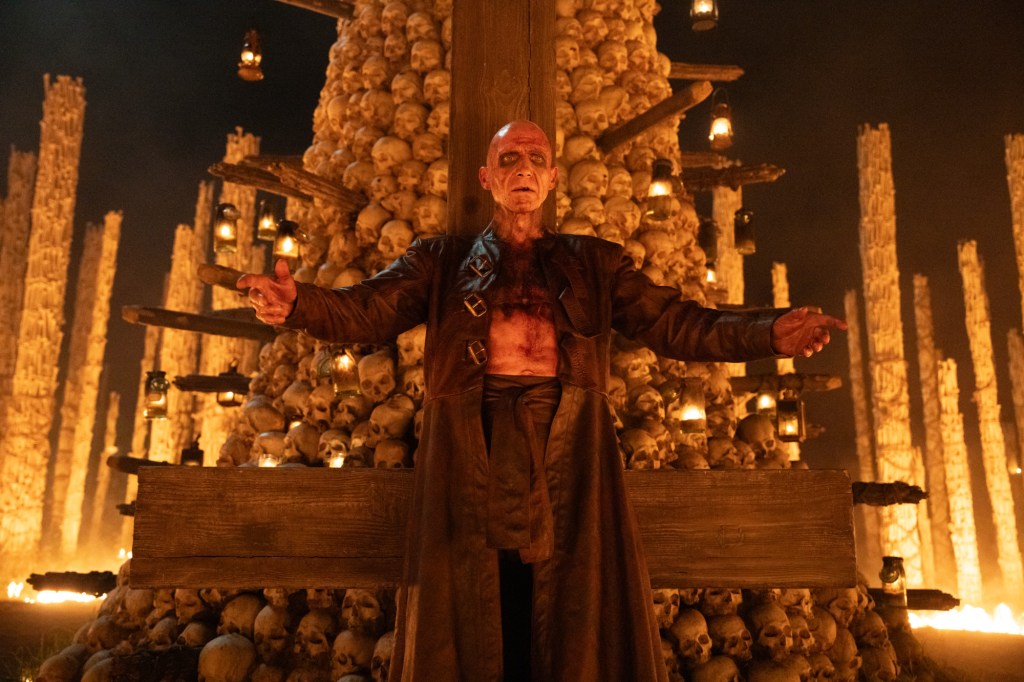
Picking up where the last film left off, Spike (Alfie Williams)- who is now called “Jimmy” – has become a reluctant new member of Jimmy’s fingers. He is initiated via a gruesome fight to the death, and his prize is that he must don a shaggy blonde wig, give up his personal identity, and submit to the whims of Sir Lord Jimmy Crystal (Jack O’Connell) and his violent delights. Much like Jim and Selena before him, Spike has been absorbed by a nightmare group of humans he must depend upon for survival.

Meanwhile and elsewhere, Dr. Ian Kelson (Ralph Fiennes, in an extension of a career defining performance within a career full up with them) is still studying the whims of the beasts in the woods, coming closer to an Alpha he’s named Samson (Chi Lewis-Parry). Samson, a spine ripping brain-eater, seems to find solace in Kelson’s choice weapon: a tranquilizer dart full up with morphine. Though the conversation is one sided, the communication is not, and Kelson’s dart provides an opening for him to consider if the infected have truly departed from their humanity.

The two groups might never cross, but Sir Jimmy is placed at the feet of Kelson when one of the members of his squad mistakes him for “Old Nick,” or Satan as it were, the man from whom Sir Jimmy claims to have gotten his status and marching orders.

The two prime stories are interspliced and carry with them distinct tones, the two tones that have made the 28 series such a lasting view of humanity in the time of gruesome crisis. The Jimmys’ are violent and cruel, their tribulations bloody and ablaze. Kelson and Samson experience tenderness, fear, hope, and a simple world where pieces of humanity are clutched to by a man in a world without any. Newcomer director, Nia DaCosta (Candyman, Hedda, et al) takes the reins from Danny Boyle who directed 28 Days Later and 28 Years Later and continues to prove herself one of the most important working filmmakers. She has dipped her toes into a well-established sandbox and managed to make the film feel completely consistent to the franchise while bringing her own voice to it. There’s less of the shaky cam panicked violence and more of the tender moments and brighter blood which makes everything feel familiar while fresh.

So much is jammed into what is purported to be a second installment in a new trilogy, but it never feels overstuffed. A second part can be doomed to feel like a bridge between a new story and its finale, but 28 Years Later: The Bone Temple (which is still written by series scribe, Alex Garland) refuses to let that neuter its stakes. Anyone can die, and stories are brought to natural conclusions in time to welcome new ones for the presumed finale. Further, things about the infected are escalated in ways that will leave zombie nerds flipping through notebook pages, wondering if we’ve ever seen the infected in these lights before. Have we seen them at rest? Consuming brains? Just being? It’s sometimes hard to accept such a twist on the franchise (and genre) but damn if it’s not compelling.

It’s perhaps tired from me, but it continues to be magical how this series represents the modern world. Tales of clutching to elements of joy in a world where one cannot let their guard down, and what it means to be alive on a cruel planet that didn’t come together for a global crisis seem ever prescient and increasingly beautiful. “I remember the certainty,” Kelson reflects, something people in this era might look back upon with a fleeting affection. Good luck to the rest of 2026 because it’s going to be difficult to best this titan.

28 Years Later: The Bone Temple hits theaters January 16, 2026
The Long Awaited ’28 Years Later’ is a Tender Tale of Manhood at War

Miya Mizuno/ Sony Pictures

It’s almost difficult to slot the latest Danny Boyle horror instalment beside legacy sequels. Yes, it’s a long-awaited sequel of a rotting franchise, but there is no sense of reinvigorating the old or rehashing any updated storylines here. The third installment of the 28 movies comes in at about twenty-two years after the original and while it shares much in common with stories like Fallout or The Village (read: Running Out of Time), it pivots from a speedy sprint away from the infected to a slow walk into humanity.

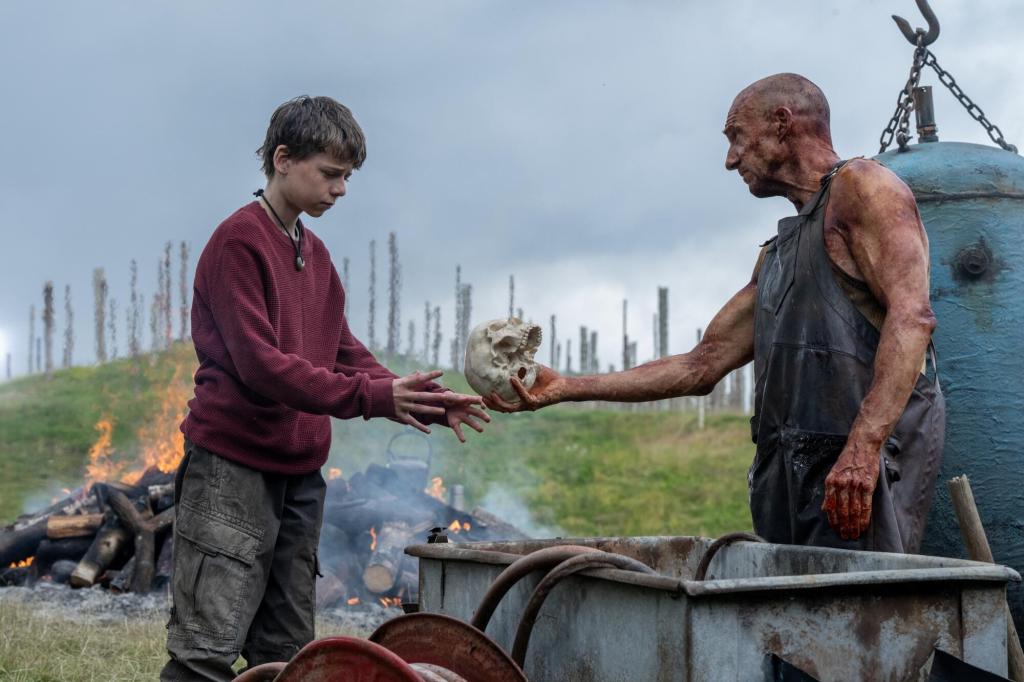
It’s been fewer than thirty years since the rage virus ravaged parts of the UK, and a colony of survivors have set up a gated village on an island in the Scottish Highlands. They are a quarantined zone, living in a pocket world cut off from the rest of the planet which has moved on from the pandemic. The people of this area have regressed to the likes of pioneers in almost a primal retraction to medieval villagers. Like the greatest of zombie features, it taps into the fantasy of a world where the only worry is survival, this one without technology or AI, none of our politics or economic worry, just the early goal of returning from war and joining industry. Here, young Spike (Alfie Williams) lives with his seasoned father (Aaron Taylor-Johnson) and ill mother (Jodie Comer). Spike is of a generation who has never seen beyond the walls of the fortified village but is forced to learn some real-world lessons when the pre-teen is taken by his father on his first visit to the mainland. There, Spike encounters the infected and is forced to defend his life with a quiver of arrows and his father’s paternal instincts. Disenfranchised and spooked by his ordeal and his father’s version of recovery, the young boy decides to visit the mainland again, this time only with his ill mother looking to pivot from being a soldier and hunter to a saviour and protector. Framing the rest like a road trip, 28 Years Later becomes a somber and tender story of a young boy choosing his own version of manhood. One who is forced to do so in place abandoned by the world and where fear is the only thing keeping people alive.

It’s a surprising turn for a sequel to films known for their high-octane scares. The fast-transforming and fast-moving zombies of this universe function to increase the tension and leave it at a lingering hum even during the quietest moments. But instead of making bigger, scarier, more monstrous infected (or instead of only doing that) Danny Boyle and Alex Garland (director and writer, respectively) chose to examine the fallout of such a pandemic and war, comparing Spike and his father to the sorts of men made by wars and global crises. The 1903 poem, “Boots,”- which was also used hauntingly and effectively in the trailer- about the Boer War is used early in the film. Throughout, there are interjections of scenes of other historical wars and soldiers. 28 Years Later is effectively an examination of a child learning manhood in a world that needs a specific version of it from him and choosing to forge his own path. Having spent most of his life under his father’s tutelage, his viewpoint is changed when he encounters a soldier, a doctor, an apparent cult leader, and versions of men who can teach him something different about who he can choose to be. The sum of it becomes a sweet tale of growth that imagines the weight carried by those on the front lines of or left behind by a crisis.

Stylistically, it’s a marvel what Boyle was able to do with a 2025 instalment of a franchise known for the aesthetic crafted in the early 2000s. Yes, he used the iPhone camera with some technology boosters, but the design and appearance also create a visual throughline. Out of the gate with a haunting cold open of children crying while watching Teletubbies, the movie is sprayed with a UK punk aesthetic. The movie doesn’t quite smell bad, but you sense that it’s all-over musty. The dizzying and frenetic edits keep the movie feeling like the guerilla blood fests you remember from 2003 and 2007, but it still fills the borders of a modern silver screen.

Where the zombie pandemic fantasy has often been about a world without modern stresses, 28 Years Later is coming on the heels of a real global pandemic that saw us retaining modern stresses which would eventually become exacerbated. It’s a tall order to examine such a thing, and perhaps why we’ve not seen any “world comes together to fight the evil,” zombie movies since 2019. Boyle and Garland’s story, instead, imagines the tears in such a fantasy, positing a world where we might regress into the likes of the Trojans or the Vikings, where instead of effectively working together to save the world, we’d send young men to the front lines and expect them to trade their lives for a version of manhood that supports someone’s idea of the greater good.

28 Years Later hits theaters June 20th, 2025